- Lifeuntox
- Posts
- Coffee Makers Swaps Guide - Bad vs Better vs Best Non-Toxic Options
Coffee Makers Swaps Guide - Bad vs Better vs Best Non-Toxic Options

Lifeuntox Daily
April 07, 2026

Welcome to The Clean Edit - Look, I need to talk to you about something that's been eating at me. Something most people do on complete autopilot, multiple times a day, without a second thought.
Your morning coffee. Or more specifically, what your coffee maker is putting INTO that coffee.
I love coffee. I mean, I really love it. It's one of the great pleasures of being alive, and the research backs that up: coffee is loaded with antioxidants, linked to lower risk of type 2 diabetes, Parkinson's, and liver disease. It's genuinely one of the healthiest things most people consume. So it kills me when I see someone doing everything right with their beans (organic, fair trade, freshly ground) and then running near-boiling water through a machine packed with BPA, phthalates, and plastic that's slowly degrading into their cup.
That plastic taste you notice with a new coffee maker? That's not just "a taste." That's chemicals making their way into your brew. And the fact that most people just accept it and keep drinking? That's the part that fires me up.
Today I'm breaking down your coffee maker options from "please reconsider this immediately" to "this is the gold standard" with something for every budget along the way.
How This Works
❌ BAD→⚠️ BETTER→✅ BEST
Every budget. Every lifestyle. Progress over perfection.
Share the clean living wisdom: Forward to someone you care about (copy URL here).
⚠️ THE PROBLEM WITH YOUR COFFEE MAKER
What's really brewing alongside your morning cup
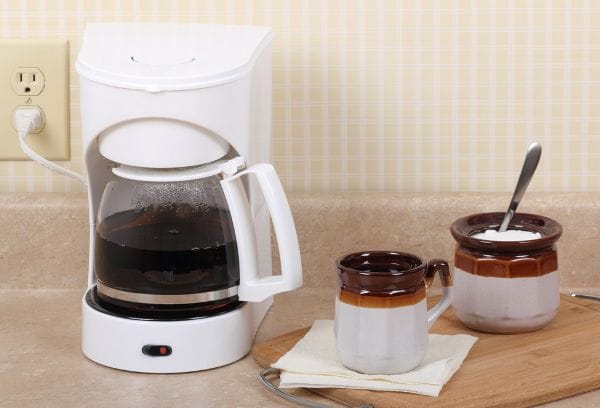
Here's what the coffee maker industry would rather you not think about: hot water is a solvent. When you push near-boiling water (195-205°F) through plastic tubing, plastic reservoirs, and plastic brew baskets, it doesn't just politely pass through. It extracts. It leaches. It carries whatever that plastic is made of right into your cup.
A 2024 study published in Foods confirmed that higher temperatures and longer exposure times significantly increase the release of microplastics from plastic containers into beverages. And your drip coffee maker runs hot water through plastic for several minutes, every single day.
It gets worse. A 2025 investigation reported by TIME found that single-serve coffee pods actively shed microplastics into every cup, with older machines releasing even more as the plastic degrades over time. Researchers at the University of Connecticut found that pod-based brewing systems release estrogenic chemicals including BPA and benzophenone from their plastic components into hot coffee.
And a pivotal study showed that when participants switched from plastic coffee makers to French presses and ceramic drip methods, their urinary BPA concentrations dropped by 66% in just eight days.
💡 KEY INSIGHT: The "BPA-free" label on your coffee maker is not the reassurance you think it is. Research shows that BPA replacements like BPS and BPF have similar hormone-disrupting properties. Scientists call this "regrettable substitution," where one harmful chemical is simply swapped for another that hasn't been studied as thoroughly. The safest approach is eliminating plastic from the brew path entirely.
Health concerns linked to coffee maker plastic exposure: Hormone disruption, impaired fertility, increased cardiovascular risk, gut microbiome disruption, oxidative stress, and potential links to cancer. A landmark 2024 study in the New England Journal of Medicine found that patients with microplastics in their arteries had higher risk of heart attack, stroke, and early death.
🔄 THIS WEEK'S CLEAN EDIT: COFFEE MAKERS
🚫AVOID - BAD
Single-Serve Pod Machines & Cheap Plastic Drip Brewers
I know this one stings because these machines are everywhere. Offices, kitchens, dorm rooms, hotel lobbies. They're designed for maximum convenience and minimum cost. But here's the uncomfortable truth: that convenience is coming at a cost to your health that most people never calculate.
Single-serve pod machines like Keurig push near-boiling water through #7 plastic pods at high pressure. Even pods labeled "BPA-free" can still contain phthalates and other endocrine-disrupting chemicals that leach under heat. Cheap drip brewers ($15-40) are built almost entirely from plastic: reservoirs, tubing, brew baskets, and carafes. Every component that touches your water or coffee is a potential source of chemical contamination.
❌ TYPES TO AVOID:
Single-serve pod/capsule machines (Keurig, off-brand pod systems)
Budget plastic drip brewers under $40 with plastic carafes
Any machine where you can see or smell plastic in the brew path
Older machines (5+ years) where plastic has degraded from heat cycling
⚠️ Why They're Harmful:
Plastic pods shed microplastics directly into every cup under heat and pressure
BPA replacements (BPS, BPF) show similar hormone-disrupting effects
Plastic degrades faster with repeated hot water cycling, worsening over time
Pod machines harbour mold and bacteria in hard-to-clean internal components
One study found BPA concentrations dropped 66% when participants stopped using plastic coffee makers
💰 Price Range: $30-180 | Pod Cost: $0.50-1.50 per cup | Lifespan: 3-5 years
👍UPGRADE - BETTER
French Press & Stainless Steel Moka Pot
Now we're getting somewhere. These are the methods your grandparents used, and there's a reason they've stood the test of time. No plastic in the brew path, no pods, no waste. Just honest materials making excellent coffee.
A quality French press is about as simple as coffee gets: glass or stainless steel carafe, stainless steel mesh filter, hot water, grounds, patience. That's it. No electricity, no plastic, no chemicals. Just you and your coffee, the way it should be. Moka pots deliver rich, espresso-style coffee using nothing but stainless steel and steam pressure.
✅ Recommended Options:
Espro P7 French Press - Double-walled stainless steel, micro-filter, zero plastic in brew path ($40-100)
Bodum Chambord French Press - Classic borosilicate glass carafe, stainless frame, BPA-free ($25-45)
Bialetti Venus Moka Pot - 100% stainless steel (not aluminium), induction compatible ($25-90)
Frieling Double Wall French Press - All stainless steel, virtually unbreakable, insulated ($70-100)
💪 The Benefits:
Zero plastic in the brew path: just glass, steel, and your coffee
No electricity required (French press and stovetop Moka)
Full control over water temperature, steep time, and grind size
No pods, no waste, no recurring costs beyond coffee and water
Many coffee aficionados consider French press the best-tasting method
Travel-friendly (stainless options are nearly indestructible)
🤔 The Trade-offs:
No automation: you're heating water separately and timing the brew yourself
French press produces some sediment (some love it, some don't)
Moka pots require a learning curve for optimal extraction
Glass carafes can break if dropped
💡 KEY INSIGHT: A stainless steel French press is arguably the single best value in non-toxic coffee making. For $30-40, you get a device with zero plastic, zero electricity cost, zero pods, and coffee that many professionals consider superior in flavour. The 4-minute brew time is about the same as waiting for a pod machine to heat up.
💰 Price Range: $25-100 | Per Cup Cost: Just coffee + water | Lifespan: 10+ years
🏆OPTIMAL - BEST
⭐ Premium Pick of the Week
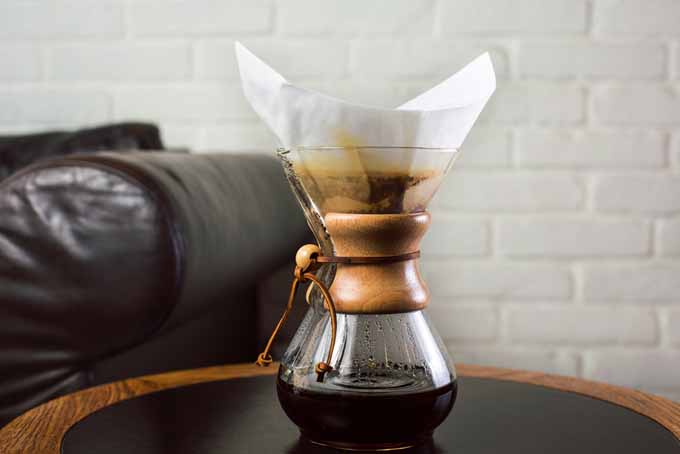
Chemex Pour-Over Glass Coffeemaker
This is where science meets art, and your morning coffee becomes something extraordinary. The Chemex isn't just a coffee maker. It's a statement about what you value: purity, quality, and refusing to compromise on the things that matter.
Invented in 1941 by chemist Dr. Peter Schlumbohm, the Chemex is made from 100% non-porous borosilicate glass, the same lab-grade glass used in scientific equipment. There is literally nothing in this device that can leach into your coffee. No plastic. No metal coatings. No synthetic materials. Just glass, a wooden collar, and a leather tie. It's so beautifully designed that it sits in the permanent collection at the Museum of Modern Art in New York.
But the real magic? Chemex's patented bonded paper filters. They're 20-30% heavier than standard filters, made from sustainably harvested North American materials, and they remove oils, sediment, and bitterness that other methods leave behind. The result is a remarkably clean, pure cup of coffee that lets you taste the actual coffee bean rather than whatever container it was brewed in.
🔬 PURITY VERIFIED:
100% borosilicate glass: zero chemical leaching, non-porous, non-reactive
No plastic anywhere in the brew path
No BPA, BPS, PFAS, phthalates, or microplastics: there's no plastic to leach from
Wood collar and leather tie: natural materials only
Bonded filters manufactured in the USA from North American materials
✨ WHY CHEMEX IS THE GOLD STANDARD:
Lab-grade borosilicate glass imparts zero flavour or chemicals
Patented thick paper filters produce the cleanest cup available
Versatile: hot coffee, iced coffee, cold brew, even tea
80+ years of proven design: the original pour-over
MoMA permanent collection piece: it's genuinely beautiful
Family-owned company, made in Massachusetts
Simple to use, easy to clean, dishwasher safe (without collar)
📦 WHAT TO START WITH:
Classic 6-Cup Chemex - The everyday workhorse, perfect for 1-2 people
Classic 8-Cup Chemex - Ideal for households or entertaining
Glass Handle 6-Cup - No collar needed, sleek all-glass design
Chemex Bonded Filters (100-pack) - Essential companion, biodegradable and compostable
⚠️ GOOD TO KNOW:
Requires manual pour-over technique (but it's meditative and simple once learned)
You'll need a separate kettle (ideally gooseneck for best control)
Glass can break if dropped (handle with care)
Filters are a recurring cost (~$0.10 per cup)
💰 Price Range: $40-55 | Per Cup Cost: ~$0.10 (filter) + coffee | Lifespan: Decades with care
🔒 PREMIUM MEMBERS ONLY
Exclusive Clean Brand Discount Codes
Here's what frustrates me: clean living shouldn't be a luxury. But the reality is that non-toxic products often cost more. That's exactly why we negotiate exclusive discount codes with the brands we trust, so our Premium members can make healthier choices without breaking the bank.
Lifeuntox Premium members currently have access to 50+ exclusive discount codes from vetted clean brands worth over $1,500+ in annual savings. We're talking codes for clean cookware, personal care, supplements, home goods, and more. Codes you won't find anywhere else online because we negotiated them specifically for this community.
✨ What Premium Members Get: 50+ exclusive discount codes | Weekly deep-dive investigations | Early recall alerts | Searchable Blacklist Database (500+ toxic ingredients) | Private community access
📊 AT A GLANCE
🚫 BAD | 👍 BETTER | 🏆 BEST | |
|---|---|---|---|
Type | Pod Machines / Plastic Drip | French Press / Moka Pot | Chemex Pour-Over |
Plastic-Free Brew Path? | ❌ No | ✅ Yes | ✅ Yes |
BPA/PFAS Risk | ⚠️ High | ✅ None | ✅ None |
Microplastic Risk | ⚠️ Confirmed | ✅ None | ✅ None |
Price | $30-180 | $25-100 | $40-55 |
Lifespan | 3-5 years | 10+ years | Decades |
Recurring Cost | $0.50-1.50/pod | None | ~$0.10/filter |
Coffee Quality | Average | Excellent | Exceptional |
🎯 YOUR ACTION STEPS THIS WEEK
Audit your coffee maker right now. Look at it. Seriously, go look. Is the water reservoir plastic? Is the brew basket plastic? Does hot water travel through any plastic tubing? If the answer to any of these is yes, it's time to consider an upgrade.
Check your coffee maker's age. If your plastic machine is 5+ years old, the polymer structure has degraded from thousands of heat cycles. Older machines release significantly more microplastics than newer ones. Age doesn't make plastic coffee makers better; it makes them worse.
Budget-friendly first step: A Bodum Chambord French press costs about $30 and eliminates plastic from your brew path entirely. That's less than a week of pod purchases for most daily drinkers. You'll actually save money while upgrading your health.
If you can invest: The Chemex Classic 6-Cup is the purest, cleanest coffee making system available. Lab-grade glass, zero plastic, and coffee that will genuinely make you wonder how you ever settled for anything less.
Learn the pour-over technique. It takes about 4 minutes and becomes second nature after a few mornings. The ritual of making pour-over coffee is something many people grow to love. Slow, intentional, delicious. It's the anti-pod experience.
⭐ RATE TODAY’S EDITION
📝 What products should be covered next?
Reply with product categories for future Clean Edit editions! Cookware? Water bottles? Food storage? Personal care? Let the team know what swaps would be most helpful.
Disclaimer: Product recommendations are based on independent research into materials, manufacturing, and safety profiles. Individual needs may vary. Always verify current product specifications before purchasing. This content is for informational purposes and does not constitute medical advice.