- Lifeuntox
- Posts
- Balance Training Prevents Falls
Balance Training Prevents Falls

Lifeuntox Daily
March 23, 2026


Good morning, wellness warriors!
Here's something that doesn't get nearly enough attention: falls are the number one cause of injury death for adults over 65. Not heart disease complications. Not medication errors. Falls. And the healthcare system's answer? Walkers, hip protectors, and hoping for the best. Meanwhile, there's a mountain of research proving that something as simple as balance training can slash your fall risk by up to 39%. Nobody's profiting from telling you to stand on one leg - so nobody tells you. Until today.
What’s brewing in today’s edition:
🦴 The fall epidemic nobody's talking about
🧘 Why Tai Chi outperforms most medical interventions
🏠 Your 10-minute daily balance protocol (zero equipment)
Share the wellness wisdom: Forward to someone you care about (copy URL here).
🚨 THE SILENT EPIDEMIC
14 Million Americans Fall Every Year
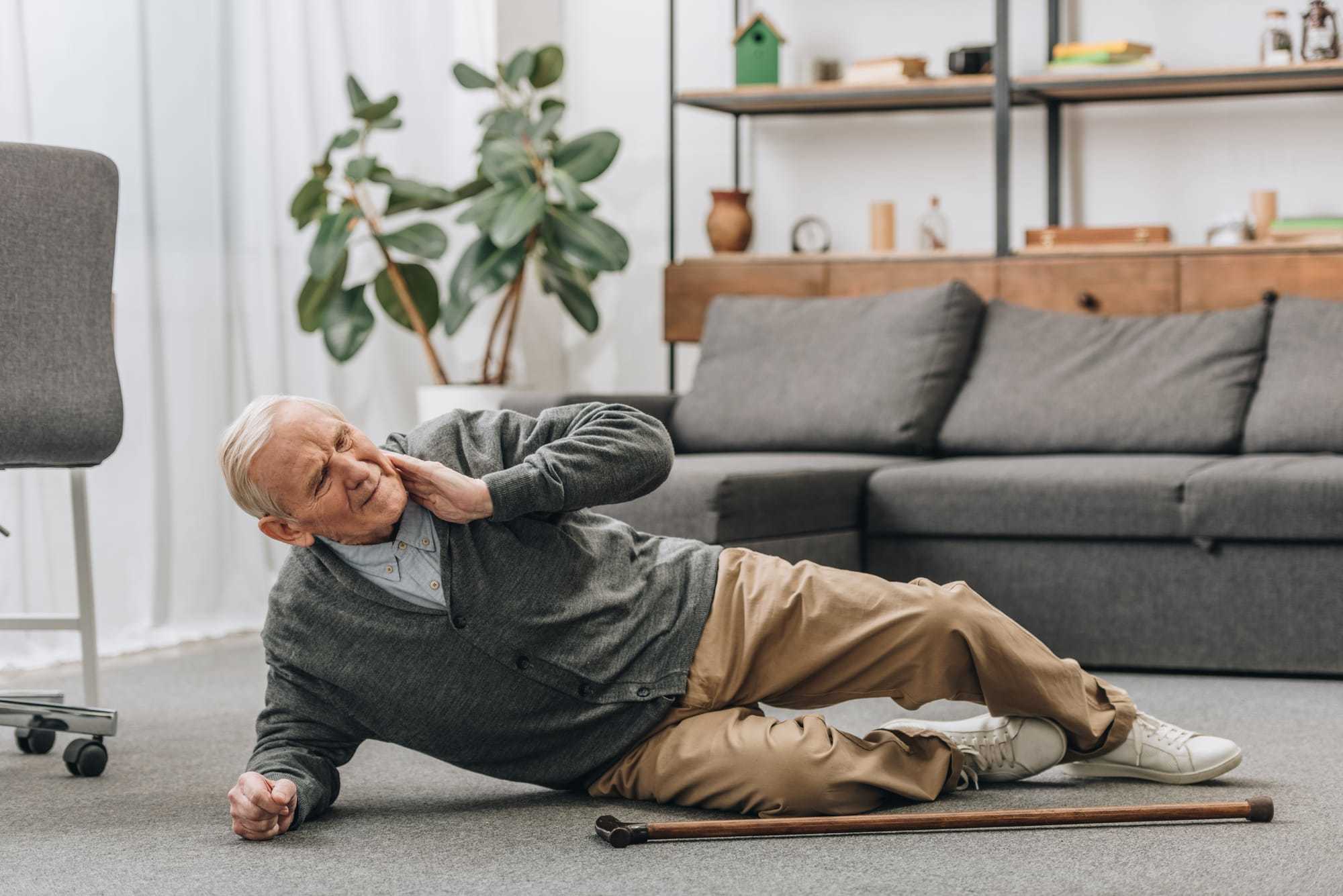
Let's talk about one of the most preventable health crises in the developed world — and one of the most ignored. According to the CDC, over 14 million adults aged 65 and older fall every single year. That's 1 in 4 older Americans. In 2021 alone, falls killed more than 38,000 people and sent 3 million to emergency departments.
New CDC data shows fall death rates among adults 65+ rose significantly between 2003 and 2023 — with rates for those 85+ more than doubling. We're going backwards. The National Council on Aging projects annual healthcare costs from falls will exceed $101 billion by 2030. In 2020, non-fatal fall costs alone hit $80 billion and Medicare picked up 67% of that tab.
Yet the mainstream medical approach is reactive, not preventive. You fall, you get patched up, you get sent home with a pamphlet. Nobody prescribes the one intervention that decades of research proves actually works: targeted balance training. Because there's no pill to sell. No device to patent. Just your body, gravity, and a few minutes a day.
💡 Key Insight: 83% of hip fracture deaths among older adults are caused by falls, according to the CDC. Falling once doubles your chances of falling again. Yet less than half of older adults who fall even tell their doctor. This isn't an ageing problem, it's a prevention failure.
— TOGETHER WITH TAIMA TITANIUM—

The Cookware That Doesn't Leach Toxins Into Your Family's Meals
Most "non-stick" pans are loaded with PFAS forever chemicals that leach into your food at cooking temperatures.
Taima Titanium is different: a 99.86% Grade 1 pure titanium cooking surface - the same biocompatible material used in surgical implants - with zero chemical coatings. Their patented SlipScale™ micro-ridge technology creates a natural non-stick surface without PFAS, PTFE, or ceramic coatings. Third-party SGS tested. FDA compliant. Trusted in 500,000+ kitchens across 50 countries.
Stop cooking on chemicals. Start cooking on science.
Vetted by our clinical research & toxicologist team. This is a sponsored partnership — purchases through our link support the Lifeuntox mission.
🧘 THE ANCIENT SOLUTION
Tai Chi Outperforms Most Medical Interventions for Falls
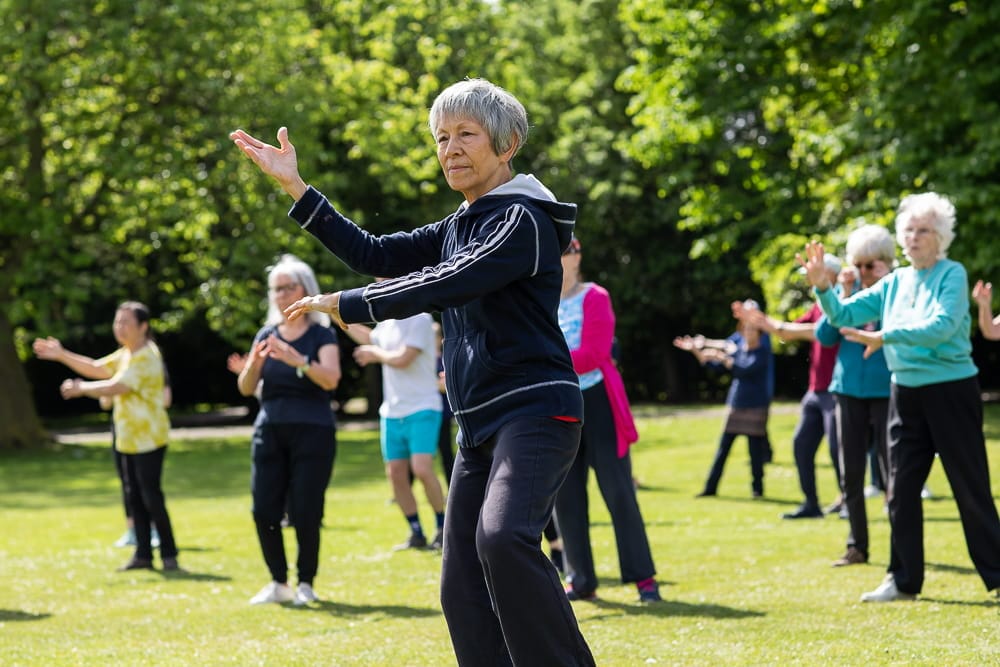
If a pharmaceutical company could bottle what Tai Chi does for fall prevention, they'd charge a fortune for it. A landmark Cochrane Review of 108 randomised controlled trials with 23,407 participants found that exercise programmes reduce the overall rate of falls by 23%. Balance and functional exercises specifically cut fall rates by 24% (high-certainty evidence). Multi-component programmes combining balance with resistance training? A 34% reduction.
But Tai Chi deserves its own spotlight. A 2024 meta-analysis in Frontiers in Medicine (22 studies) confirmed that Tai Chi significantly improves static balance, dynamic balance, gait speed and postural control. A systematic network meta-analysis in Aging Clinical and Experimental Research (17 trials, 3,470 participants) found Yang-style Tai Chi was particularly effective — and that the preventive effect increases with practice frequency.
Here's the part that makes this so powerful: Tai Chi works on multiple systems simultaneously. The slow weight transfers strengthen lower limbs. The trunk rotations improve postural control. The focused movements enhance cognitive function and spatial awareness. It even reduces the fear of falling - which is a massive risk factor, because people afraid of falling restrict their activity, lose more strength, and then fall more. It requires no equipment, no gym membership, no special clothing. Just you and 15 minutes of intention.
💡 Key Insight: The British Journal of Sports Medicine found that exercise programmes challenging balance with more than 3 hours per week achieved a 39% fall reduction — nearly double the average. The dose matters. More balance challenge + more frequency = dramatically fewer falls.
🏠 YOUR ACTION PLAN
The 10-Minute Daily Balance Protocol
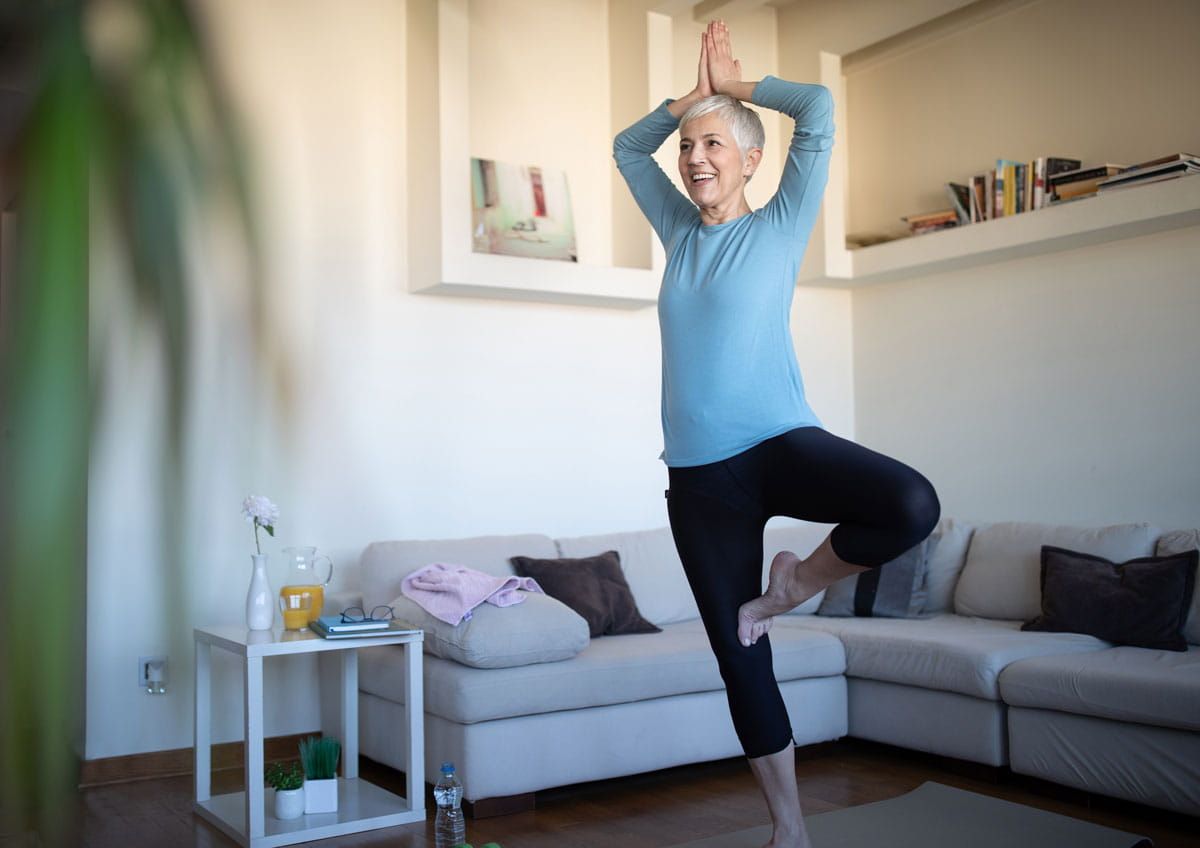
Knowing the research is one thing. Doing something about it is everything. The Healthy People 2030 initiative confirms that both group-based and home-based balance programmes are effective for fall prevention. You don't need a class. You don't need a referral. You need consistency and progressive challenge.
Here's your evidence-based starter protocol - aim for at least 3 sessions per week (daily is ideal):
1. Single-Leg Stance (2 min): Stand on one leg for 30 seconds, switch. Repeat twice each side. Hold a counter edge initially, then progress to hands-free, then eyes closed.
2. Heel-to-Toe Walk (2 min): Walk 20 steps placing heel directly in front of opposite toe. Focus on a point ahead. This trains the exact gait pattern that prevents trip-and-fall injuries.
3. Sit-to-Stand (2 min): From a chair, stand up without using your hands. Sit back down slowly (3-second count). Repeat 10 times. This targets the lower-body weakness that's the single biggest fall predictor.
4. Weight Shifts (2 min): Stand with feet hip-width apart. Slowly shift weight fully onto left foot (lifting right slightly), hold 5 seconds, switch. Repeat 10 times each side.
5. Tai Chi-Inspired Trunk Rotations (2 min): Stand in a slight knee-bend. Slowly rotate upper body left, then right, shifting weight with each rotation. 10 slow repetitions. This mimics the exact movement pattern shown to improve postural control in clinical trials.
The progression principle is critical: once an exercise feels comfortable, make it harder. Close your eyes. Stand on a cushion. Add a head turn. Research shows the balance challenge is what drives adaptation - if it's easy, it's not training your balance systems. Start this week. Share it with your parents, your grandparents, your neighbours. This could save a life. That's not hyperbole, that's what the science says.
💡 Key Insight: The CDC's STEADI initiative confirms that risk factors like lower-body weakness, gait difficulties, and medication use (tranquilizers, sedatives, antidepressants) all compound fall risk. Reviewing medications with your doctor and building daily balance practice addresses both sides of the equation.
✉️ COMMUNITY CORNER
Your Questions & Feedback From Recent Newsletters
“I love all your posts……You do an excellent job — and both the info and your clear, articulate presentation of the info are invaluable! I have been doing the morning lemon water and find it enormously beneficial. I’d like to try baking soda as well, but am wondering how those two protocols interact. Is there a ‘best’ way to do both?”
Editor's note: Great question, Meg! Lemon water (acidic) and baking soda (alkaline) work in opposite directions, taking them together would cancel each other out.
The fix: Keep them separated. Lemon water first thing in the morning. If using baking soda, take it mid-morning or a couple hours after dinner, away from meals and away from the lemon water. Let each do its job. And with baking soda, less is more - it's high in sodium, so keep it occasional.
“Listening to silence as a way to connect with my inherent nature is key to knowing the truth of beingness. Thank you for today's slow living reminder ❤️”
“I truly enjoy all of your editions but today was something I really needed I love silence but I've been made to feel that sitting silently for a few minutes is wasting time. I'm so relieved and happy to know that silence is really restorative and healthy. I am definitely going to utilize the exercise that you suggested and enjoy my silent time.”
💡 HEALTH HACK OF THE DAY
The "Brush Your Teeth" balance hack: Stand on one leg every time you brush your teeth - 30 seconds per leg, morning and night. You'll accumulate 2 minutes of daily balance training without adding a single minute to your routine. It's the easiest fall-prevention habit you'll ever build.
🛍️ TODAY’S RECOMMENDED SWAPS
❌ Teflon Non-Stick Pan → ✅ Taima Titanium Pan — Pure titanium cooking surface, zero PFAS, no chemical coatings that degrade into your food
❌ Sedentary Evening Routine → ✅ 10-Min Balance Protocol — Replace 10 minutes of screen time with the balance routine above. Your future self will thank you.
❌ Standard Rubber-Soled Slippers → ✅ Non-Slip Barefoot House Shoes — Thin-soled, grippy footwear improves proprioception (your body's awareness of where it is in space) and reduces indoor fall risk
❌ Dim Hallway Lighting → ✅ Motion-Sensor LED Night Lights — Poor lighting is a top environmental fall risk factor. Automatic path lighting eliminates fumbling in the dark without disrupting sleep
❌ Loose Bathroom Rugs → ✅ Non-Slip Adhesive Bath Mat — Unsecured rugs on wet floors are fall traps. Adhesive mats with suction grips stay put and give you a stable surface where it matters most
All products are independently researched for safety and effectiveness. Purchases support our mission with a small commission.
⭐ RATE TODAY’S EDITION
How Was Today's Edition? |
📝 Got questions, feedback, or aha moments?
Reply to this email with your thoughts, questions, or responses for a chance to be featured in tomorrow's Community Corner! We read every single email and love hearing your breakthroughs, struggles, and everything in between.
This material is provided solely for informational purposes and is not providing or undertaking to provide any medical, nutritional, behavioral or other advice or recommendation in or by virtue of this material. This newsletter is for general informational purposes only and does not constitute the practice of medicine, nursing or other professional health care services, including the giving of medical advice, and no doctor/patient relationship is formed. The use of information on this newsletter or materials linked from this newsletter is at the user’s own risk. The content of this newsletter is not intended to be a substitute for professional medical advice, diagnosis, or treatment. Users should not disregard, or delay in obtaining, medical advice for any medical condition they may have, and should seek the assistance of their health care professionals for any such conditions.